
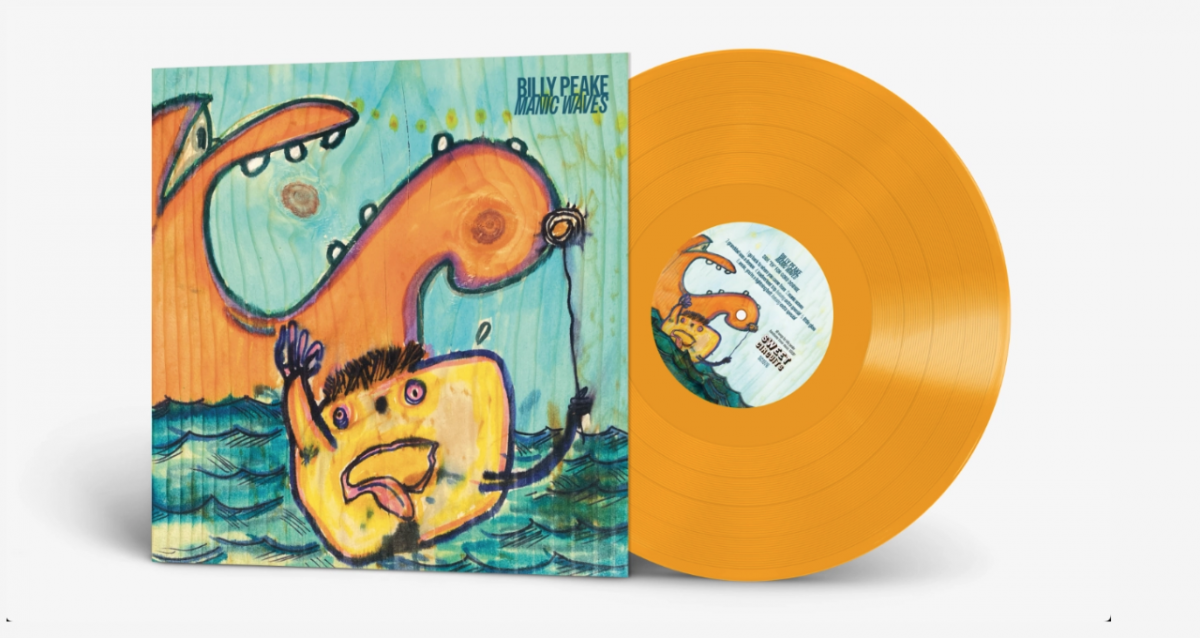
At its core, Manic Waves is an album obsessed with structure—how sound behaves under pressure, how melody survives distortion, and how arrangement can carry meaning as effectively as lyric. Billy Peake approaches production like an architect rather than a traditional songwriter, building rooms of texture rather than simple song shapes.
The instrumentation is deliberately unstable in its balance. Analog drum loops rub against organic percussion, while synth textures hover between nostalgia and unease. Guitars don’t dominate so much as weave, often receding in favor of horns or rhythmic devices that feel more physical than harmonic. The result is a sound that constantly feels like it’s shifting its footing.
A major part of the album’s coherence comes from its collaborators, whose presence adds weight without overriding Peake’s vision. The mix has a muscular clarity that allows contradictions to breathe rather than clash, and the mastering preserves both grit and gloss in equal measure. Even when the songs stretch outward, they never lose their internal logic.
What’s most impressive is how dynamic control is used as narrative. The album doesn’t rely on volume or density alone; it understands restraint as tension. Quiet passages often feel more volatile than louder ones, and bursts of sonic saturation arrive like emotional punctuation rather than default climaxes.
In the end, Manic Waves feels engineered rather than merely recorded. It’s an album where sound is argument, and arrangement is perspective.