The title of Dolce Wang’s debut album arrives as both a statement and a question, a philosophical proposition wrapped in the guise of a simple phrase. Any Other Way suggests alternatives, possibilities, divergences from predetermined paths, and the Los Angeles-based polymath has spent the better part of a decade exploring precisely these alternatives across four continents and countless emotional landscapes. The result is an album that feels less like a collection of songs and more like a travelogue of the soul, a document of one artist’s refusal to accept the map as it was handed to her. It is music that exists in the liminal spaces between genres, between cultures, between the life we are told to live and the life we discover for ourselves, and it is all the more powerful for its resistance to easy categorization.
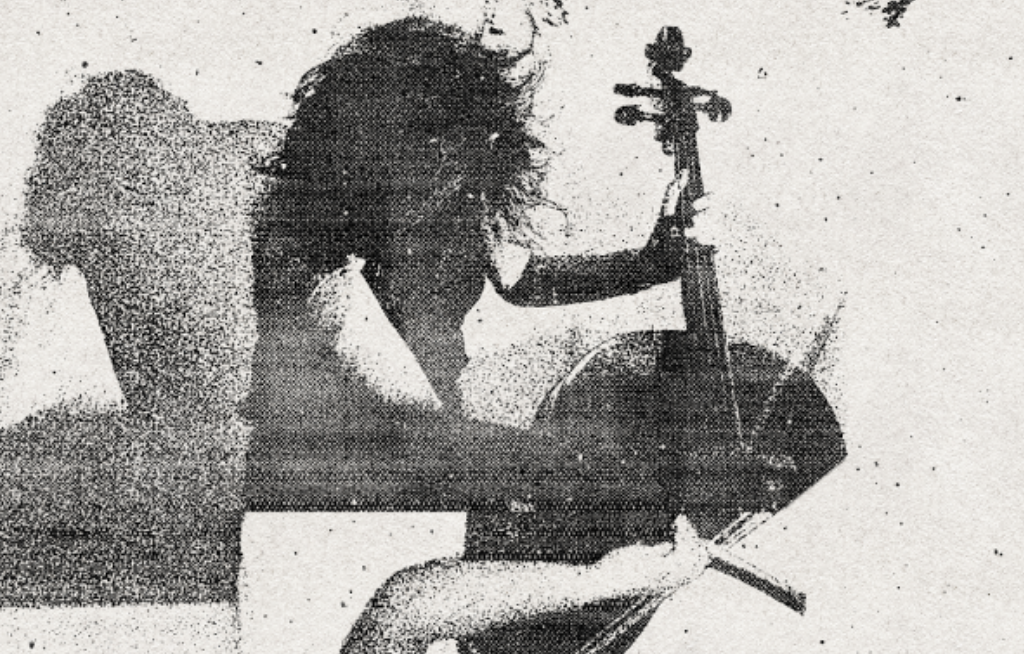
Wang’s classical training on cello provides the album’s foundation, but it is her willingness to deconstruct and reimagine this training that gives Any Other Way its distinctive character. Having studied the works of Haydn, Brahms, and Elgar, Wang possesses a technical facility that allows her to execute complex passages with apparent ease, yet she deploys this skill with remarkable restraint, understanding that in the world of dream pop and shoegaze, what is left unsaid often resonates more deeply than what is played. The cello lines that weave through these twelve tracks are not decorative flourishes but structural elements, carrying melodic weight and harmonic complexity with the same authority one might expect from a soloist at Carnegie Hall, yet always in service of the song rather than mere display.
The album’s sonic palette reflects Wang’s diverse influences and experiences, with production from Aleksandar Sasha Panich creating a soundscape that feels both meticulously crafted and organically alive. The shoegaze textures that surface on tracks like “Satellite Sky” and “Echo Park” evoke the sensation of movement, of landscapes blurring past, while the more stripped-back indie folk moments on “The Art of Losing” and “Wildflowers” capture the stillness of arrival. Panich’s mixing creates a three-dimensional quality that rewards repeated listening, with synthesizer textures providing a counterpoint to acoustic instruments that feels futuristic without being cold. The international ensemble, including Serbian drummer Serge Milenkovic and Taiwanese violinist Edith Lin, brings a global perspective that enriches every track, their distinct musical backgrounds converging in a unified sound that transcends borders.
Lyrically, Wang navigates themes of love, grief, resilience, and homecoming with a directness that feels earned rather than manufactured. Her observation that “most of us spend years walking a path before we realize we’ve been holding the paper upside down” captures the album’s central preoccupation with the gap between prescribed and discovered lives. The songs draw inspiration from conversations and dreams encountered during her travels, yet Wang avoids exoticizing her experiences, instead focusing on the universal emotions that connect us all. This is songwriting that trusts its audience to sit with complexity, that understands the most profound connections are often forged in moments of shared vulnerability, that recognizes healing as a nonlinear process that defies tidy resolution.
Any Other Way culminates in its title track, a masterwork of emotional restraint that builds toward a resolution both earned and deeply affecting. By the time the final notes fade, listeners have been taken on a journey that mirrors Wang’s own, a pilgrimage through the heart’s uncharted territories. This is an album that invites repeated listening, that rewards attention and engagement, that meets listeners where they are rather than dictating where they should be.
Dolce Wang has crafted a debut that announces the arrival of a singular voice, one that speaks in the language of classical tradition while embracing the possibilities of contemporary production, one that honors the past while charting its own course into the future. Any Other Way is the sound of an artist who has finally stopped trying to read the map upside down and has instead chosen to draw her own.